
Doors are closed now.
30 places.
Enrolment opens again on Tuesday 29th September.
Reverse Type 2 Diabetes
Reduce your blood sugar. Reduce the medication. Keep the foods you love.
A 12-month, doctor-led pathway that gets to the root of why your numbers will not move, and puts type 2 diabetes and prediabetes into remission. Built around the real, busy life you actually live.
How to Reverse Type 2 Diabetes and Take Back Control of Your Health.
BEFORE:
- Doing everything you were told, and the numbers still will not move.
- Cooking two dinners, or feeling like the odd one out at your own table.
- A blank mind at 6pm when someone asks what is for dinner.
- Evenings taken over by cravings that feel like a willpower problem.
- Guilt after every lapse, leading to the 'all-or-nothing' spiral
- Another tablet added, and a quiet worry about where this is heading.
AFTER 6 WEEKS:
- A clear reason the numbers were stuck, and the satisfaction of watching them come down.
- One meal on the table, your base quietly swapped, and nobody else any the wiser.
- A fortnight of meals that runs on autopilot, even on a tired Wednesday.
- A troubleshooting system so one bad day never becomes a bad week
- A biological process that's finally working with you, not against you
"Food is where this begins. Lasting remission comes from the layer underneath it. The hormones, the sleep, the stress, and the brain that has quietly been working against you for years. "
Why it's not your fault!
When you eat – and I’m not talking about cake, I’m talking about toast, porridge, a sandwich, pasta – your blood glucose rises.
Your body releases insulin to bring it back down. Normal. Happens in everyone.
But if those foods contain more glucose than your body handles comfortably, the response is bigger. The drop comes faster and further than it should. And when blood glucose falls too low, your brain doesn’t think: we’re on a health kick, let’s be disciplined.
It thinks: emergency. Get sugar. Now.
That is what’s happening on the sofa at 9pm. Not so much a willpower problem. Biology.
A typical ‘healthy’ day of eating:
Wholemeal toast · Sandwich at lunch · Pasta for dinner
Can contain the equivalent of
over 30 teaspoons of sugar.
Not because anyone added sugar. Because that’s what those foods break down into in your blood.
For most people, getting the food right is where everything starts to change. And for some, the food is only the first layer.
There is more underneath, and I will show you all of it.
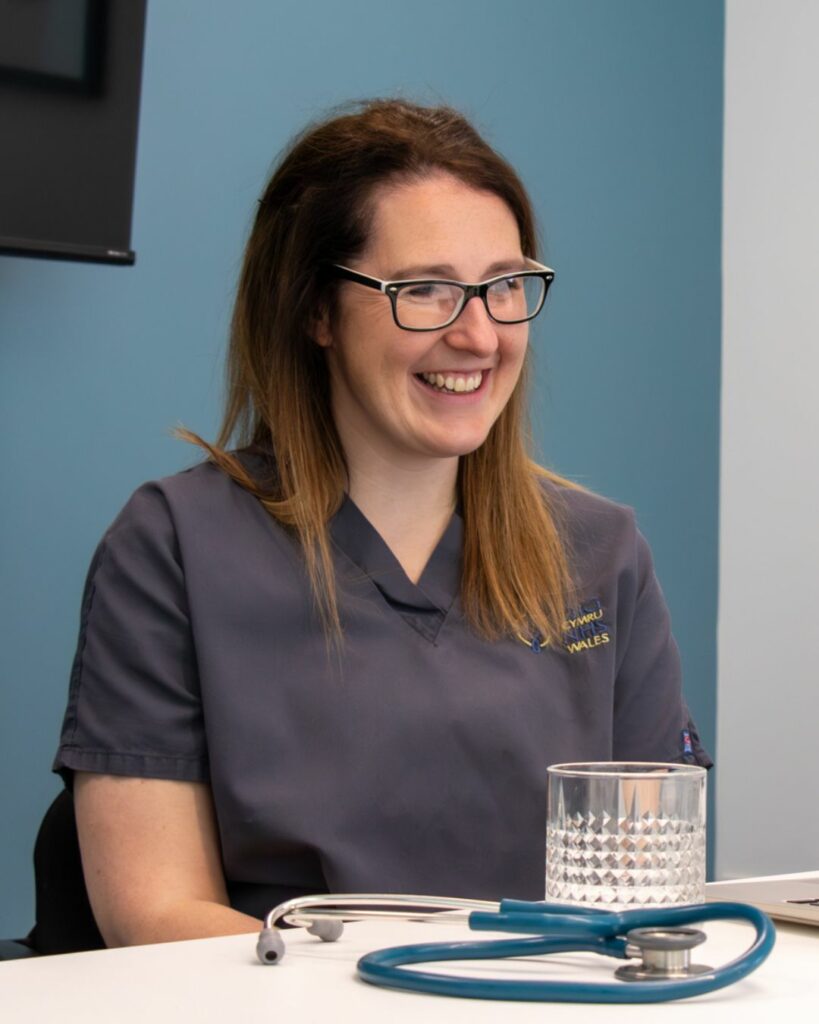
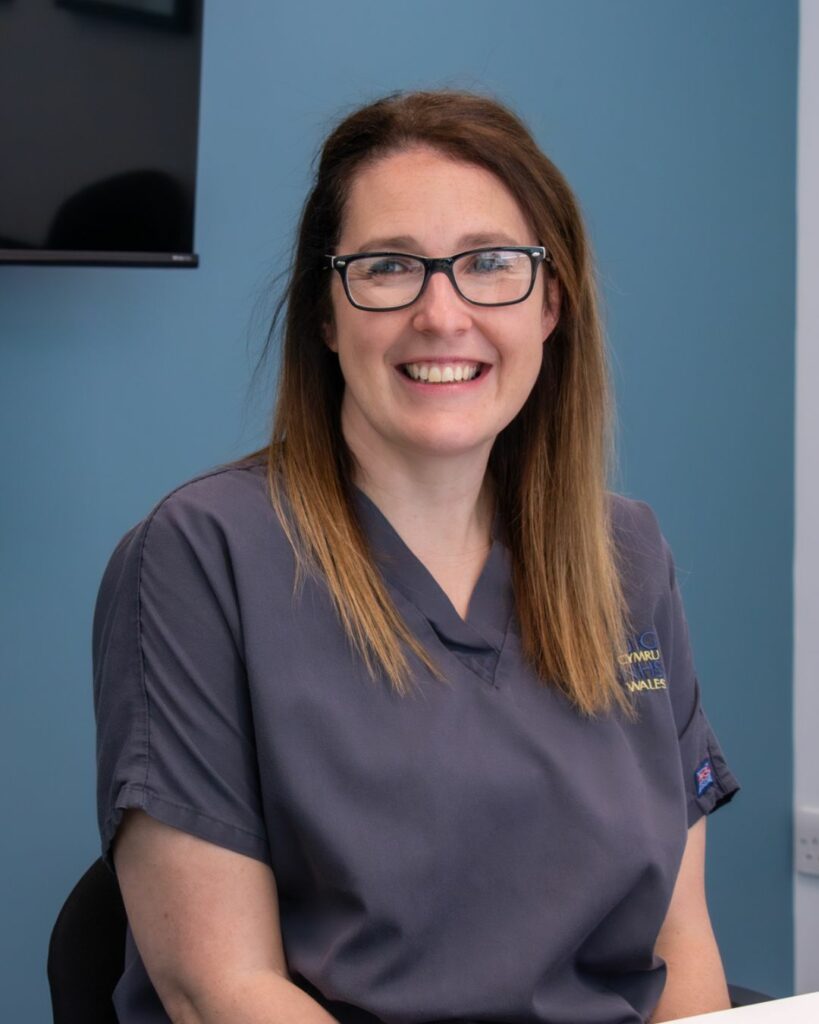
Hi! I'm Dr. Nerys Frater.
I know what it feels like to get told to cut out sugar and not want to face it.
When I developed gestational diabetes with my second child, my first reaction was irritation at being told I needed to ‘cut out the sugar’. I didn’t want to! I thought fixing it meant saying no to every single treat, every day, all of the time. Not just sugar, but cravings, & all the foods I actually wanted. I thought it was a willpower problem. I didn’t think I had enough of it. And I thought I’d have to be perfect to solve it.
I’m a GP. I work in this field every day. And I still thought that.
What I’ve learned since, and what I want you to hear – is that neither of those things are true. The cravings aren’t a character flaw. They’re biology. And the body, given the right foundations, wants to heal. It doesn’t need perfection.
I had completely overestimated how hard this needed to be.
Blood Sugar Mastery is the pathway I wish someone had handed me.
The whole of it, in order, over a year, so the results actually last.
One step at a time
New content opens in stages, not all at once. We start with breakfast and build, week by week and then month by month, into a complete way of eating. No information dump. No overwhelm.
Simple. British. Affordable
Everyday ingredients from any supermarket. No exotic food. No expensive kit. No complicated recipes. Just plain, familiar food that works for your body and your budget.
Real life. Not perfect life.
Built for busy households, fussy families, and weeks that don't go to plan. I show you how let go of the perfection mindset and keep moving anyway.
Who is this for?
Is Blood Sugar Mastery for You?
This is for you if:
- You've been told you have prediabetes or type 2 diabetes and want to take action & not just accept more medication
- You feel like you're doing everything right but your numbers aren't moving
- You're exhausted by conflicting advice and want someone to simply tell you what to do
- You're cooking for a family with different needs and can't face another complicated meal plan
- You've tried low carb before but suspect you've been doing it wrong
- You want the whole pathway, the food and everything underneath it, in one place.
This is not for you if:
- You are looking for a quick fix or a short-term diet rather than a lasting food system.
- You are not willing to start small. This programme asks for patience with the process
- You have type 1 diabetes, or a past or current history of an eating disorder.
Introducing Blood Sugar Mastery!
Blood Sugar Mastery is for people with prediabetes or type 2 diabetes who want to put it into remission and reduce or come off medication, without traditional dieting.
It runs in three phases, and each one builds on the last. You can move at your own pace, repeat anything, pause for a holiday and pick it back up.
The point is not only to get the results. It is to keep them.
The Pathway, Phase by Phase
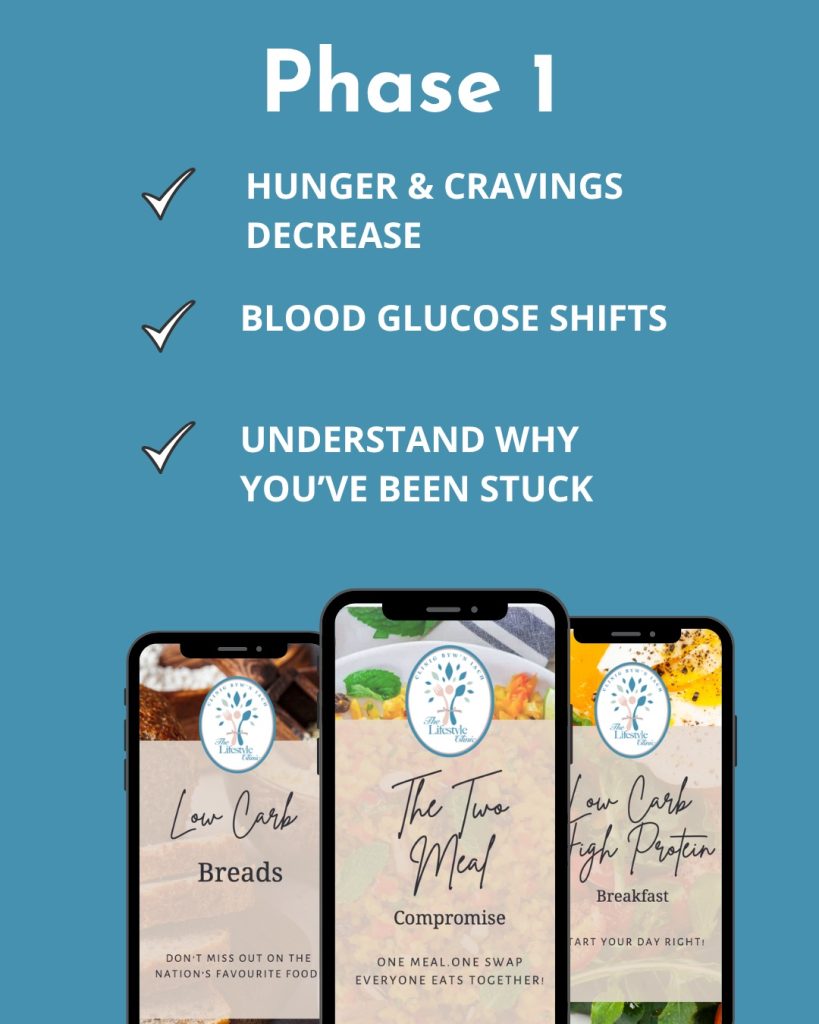
Phase 1: Calming the Rollercoaster
The fastest way to calm the rollercoaster is to take out the sugar and the hidden glucose, and I show you exactly where it hides, even in the foods you were told were healthy.
We start with breakfast. Then I show you the big levers. If the family is having lasagne, I show you the single swap that takes eight teaspoons of sugar off your plate while everyone eats the same meal. Your husband never needs to be on board.
From there we work through your actual life. The takeaways, the Sunday roast, with vegetarian, vegan, gluten free and dairy free versions worked out for you. You build an autopilot meal system, a handful of meals on repeat, so the 6pm decision disappears.
Progress beats perfection, so a stressful week still moves you forward. You get over 100 recipes, made from everyday British ingredients already in your cupboard.
By the end of the first phase the cravings have quietened, your blood glucose has come down, the weight is shifting, and you finally understand why you were stuck.
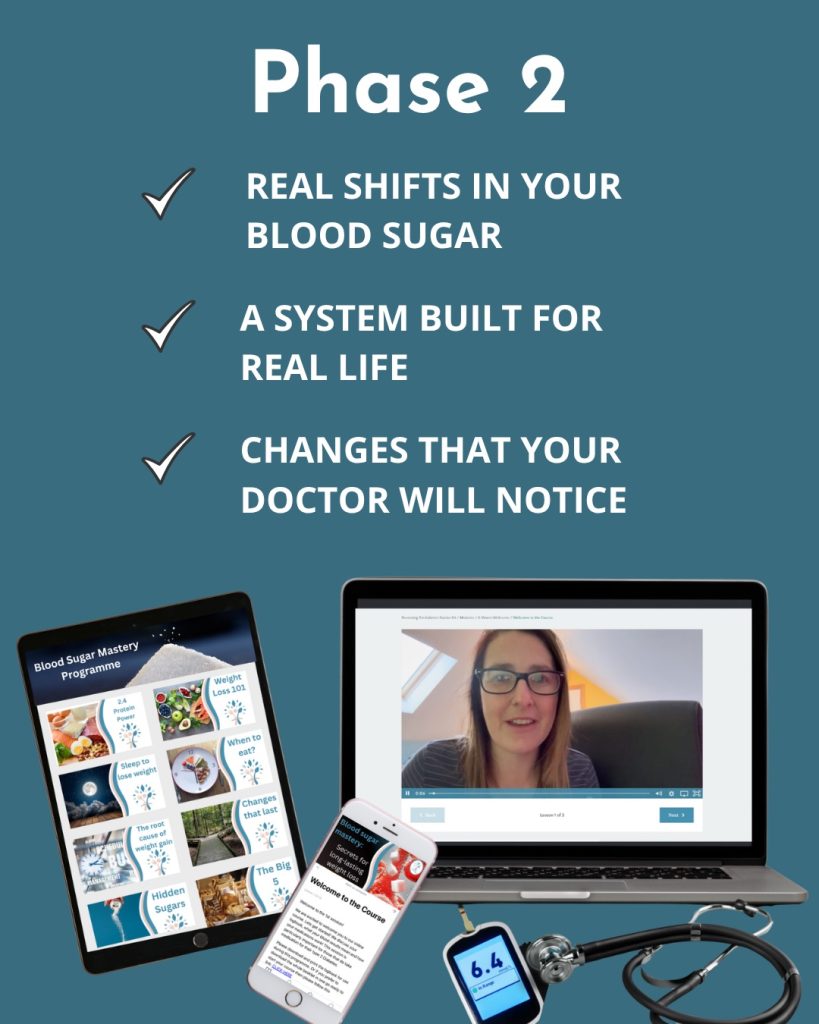
Phase 2: Uproot the Cause. Heal the Pancreas
Now the foundations are in, we look deeper. Because the food is the tip of the iceberg, and what sits underneath is the very thing that makes this last.
Not everyone has diabetes because of the way they eat. So we look at the other hormones.
Cortisol, your stress hormone. This tells your body to hold onto fat and pushes your blood glucose up, whatever you eat. Sleep, where one bad night raises your hunger hormones and your sugar cravings the very next day. The hormonal shifts that come with age, which raise insulin resistance in men and women alike, so your strategy has to move with your body.
We take these one at a time, over about three months, with guides, videos and a simple process for each.
This is the phase where your GP looks at your blood test and asks what on earth you have been doing. The HbA1c coming down. The cholesterol settling. The blood pressure easing. And for some, a conversation about reducing the medication.
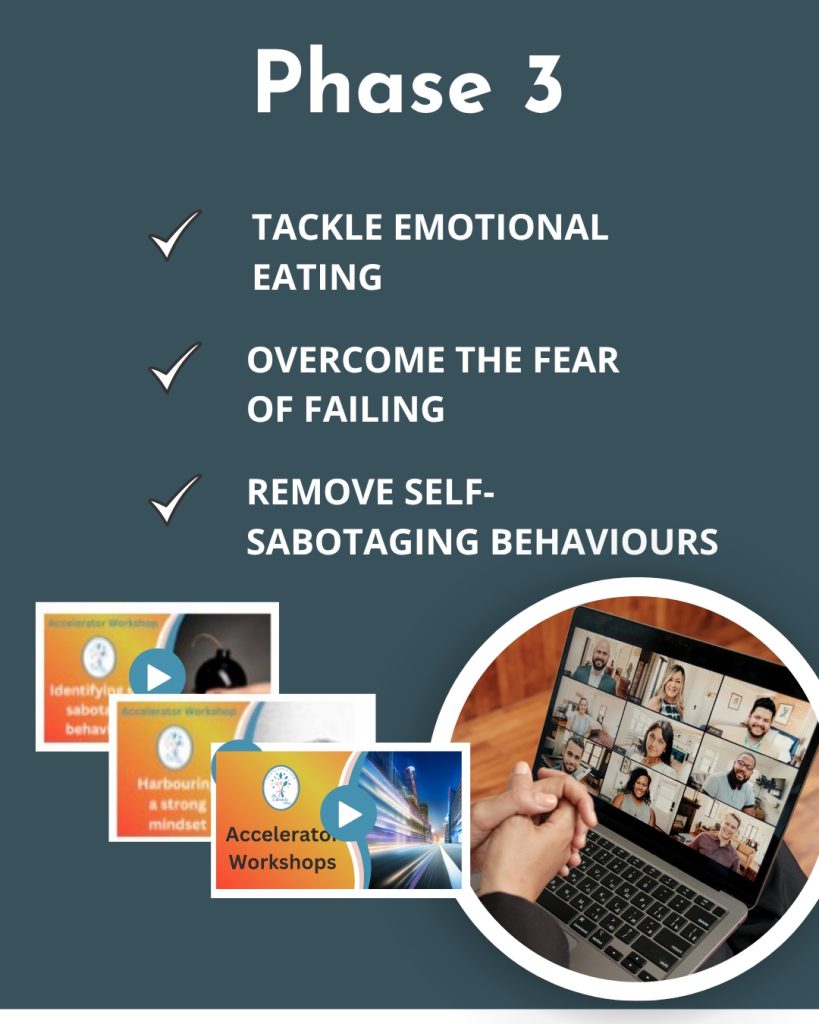
Phase 3: Break the Loop. Make it Last
Your brain does not actually want you to lose weight. It is hard-wired to pull you back to familiar food to keep you safe. In this phase I show you how to work with it.
First, the eating that has nothing to do with hunger. The biscuit after a hard day. The wine to come down from it all. The chocolate after a row. Second, the fear of failing, because most people who come to me have started before, many times. Third, the self sabotage, that voice that turns up just as things are going well and talks you into undoing them.
All of it comes together in the Accelerator sessions. These are live workshops with me, once a month, on Zoom, with a workbook to guide us. Join in and ask questions, or sit with your camera off and just listen. If you cannot make it live, the recording is there straight after.
By the end you trust yourself. To go away for a weekend and come home and carry on. To have the slice of birthday cake and not spiral. To know a wobble is only a wobble. Once your brain is on your side, none of it takes willpower any more. It simply becomes who you are.
No exotic ingredients. No complicated recipes. No on-off dieting pattern. Just the clearest starting point you have ever been given.
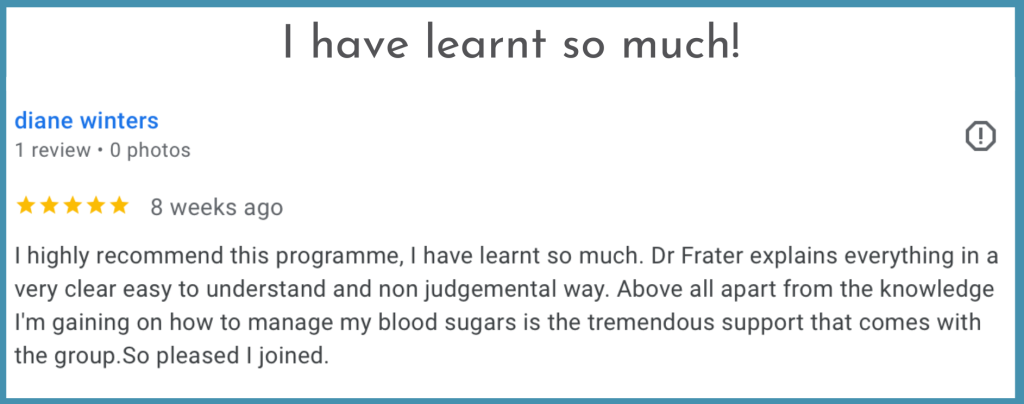
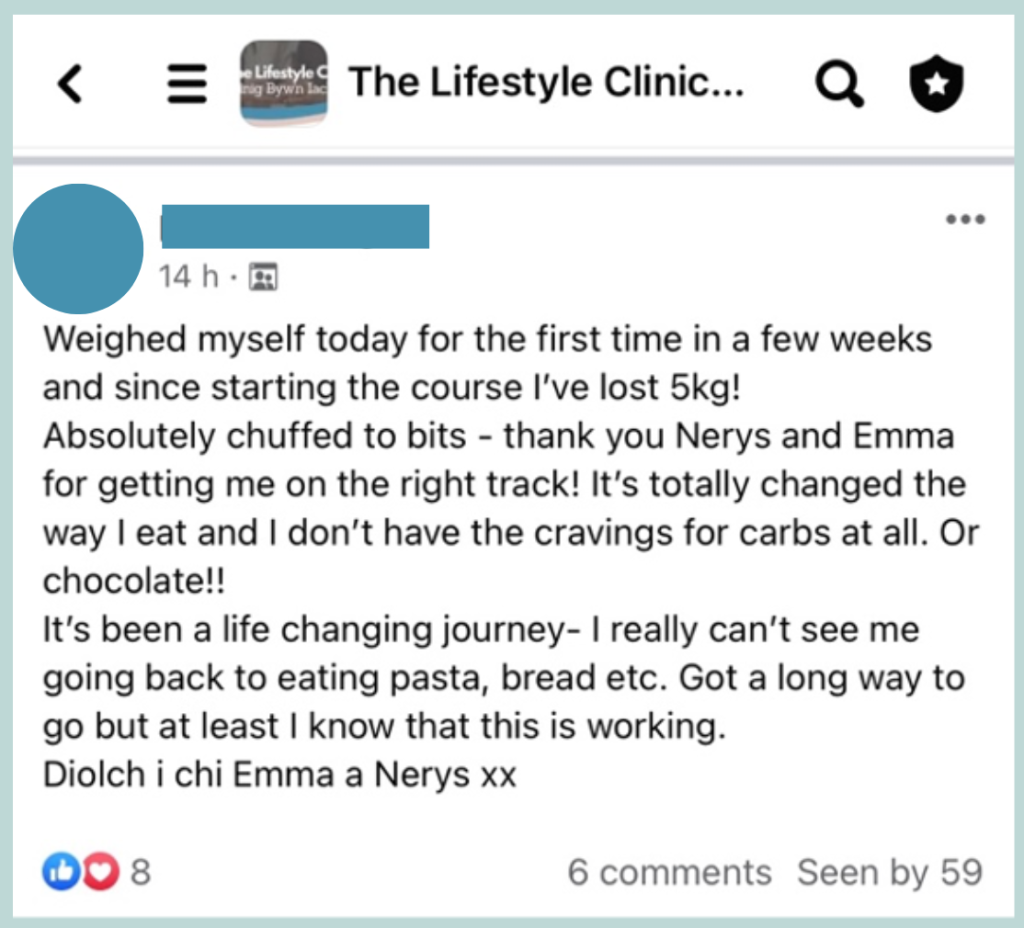
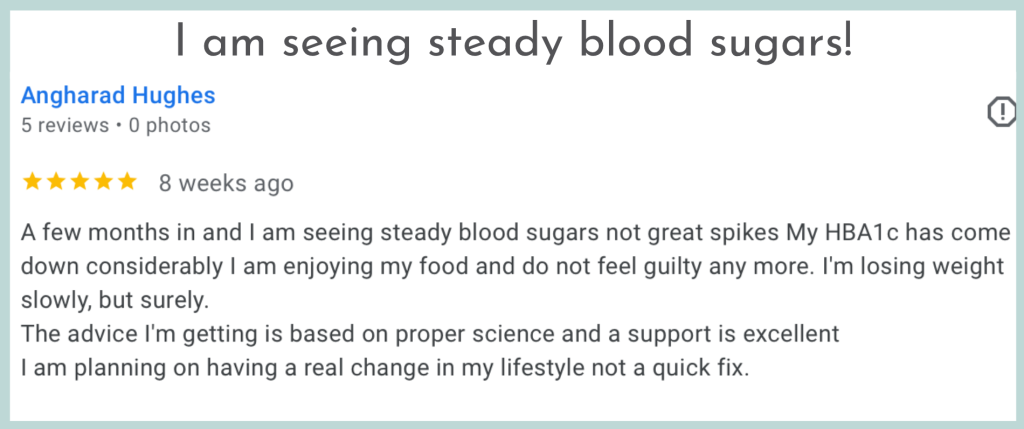
Which of these transformations inspires you?
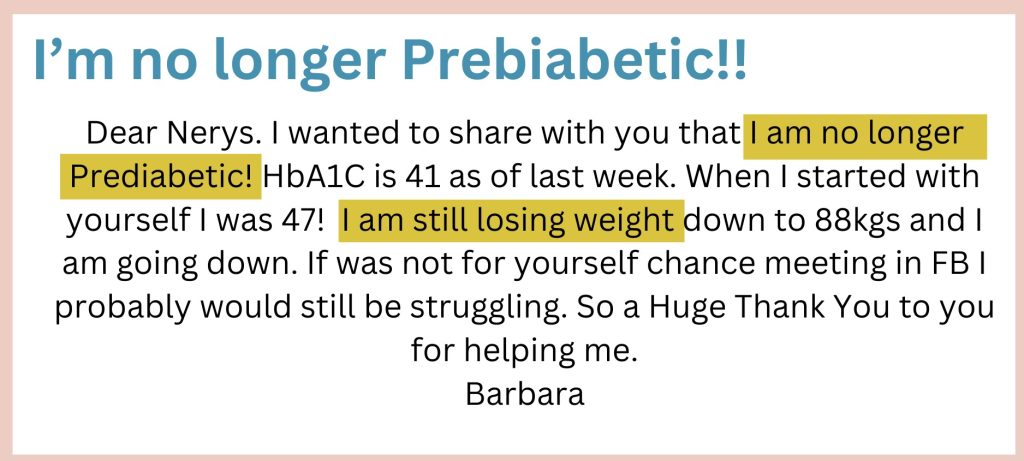
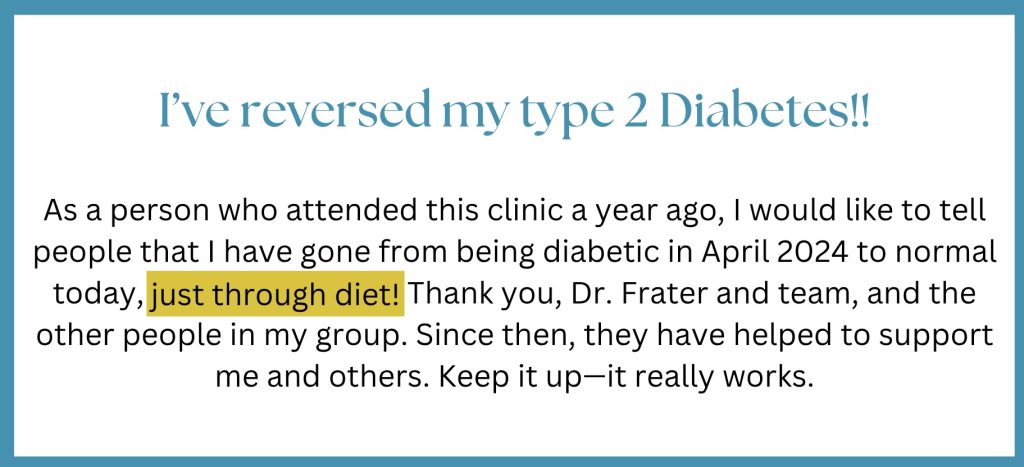
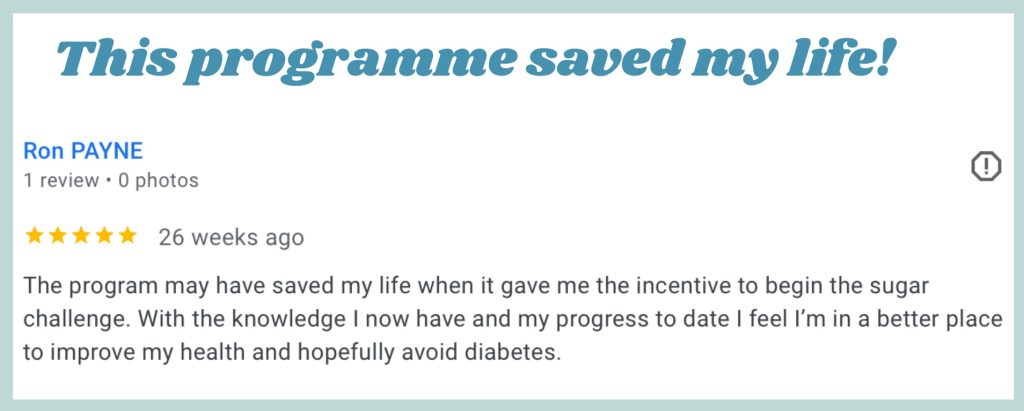
Look at these results, all within 3 months of starting.
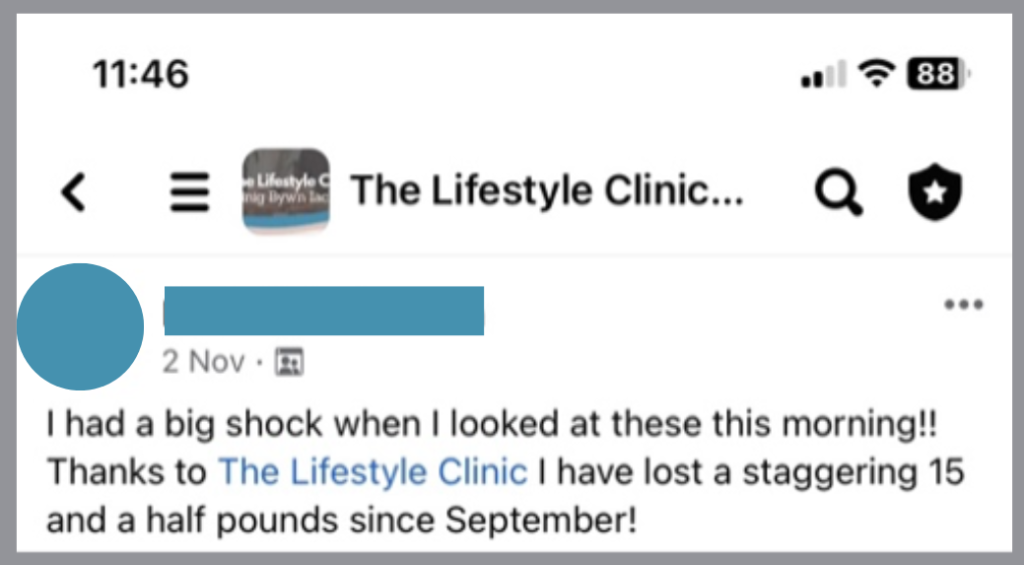
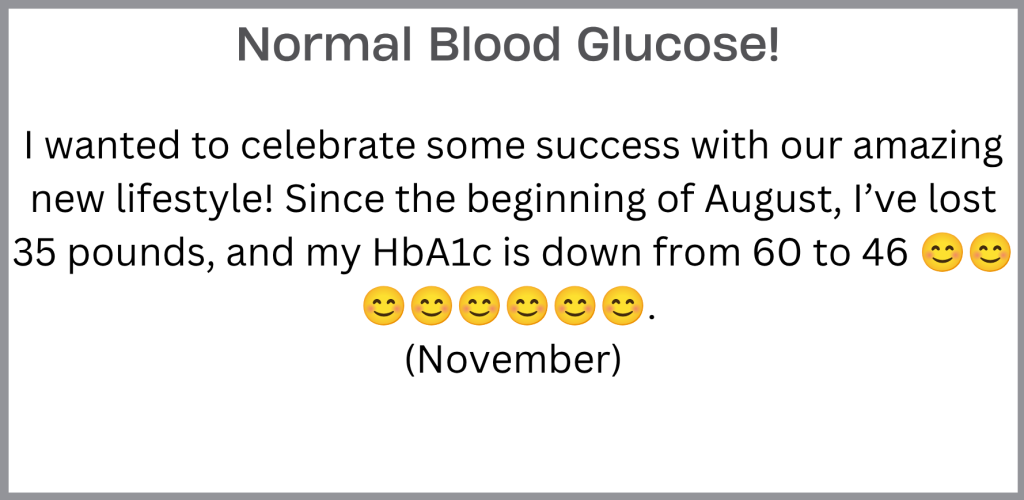
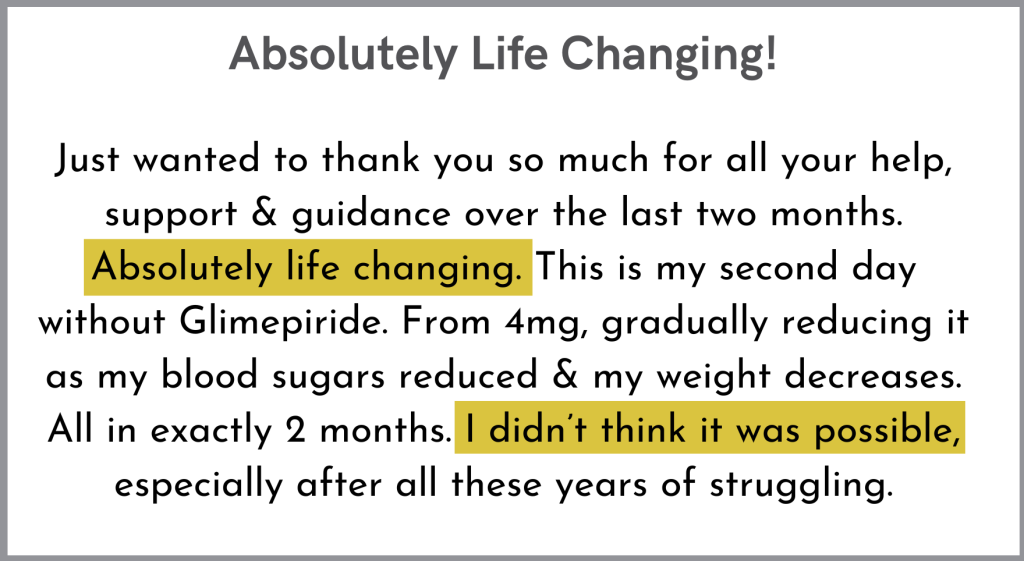
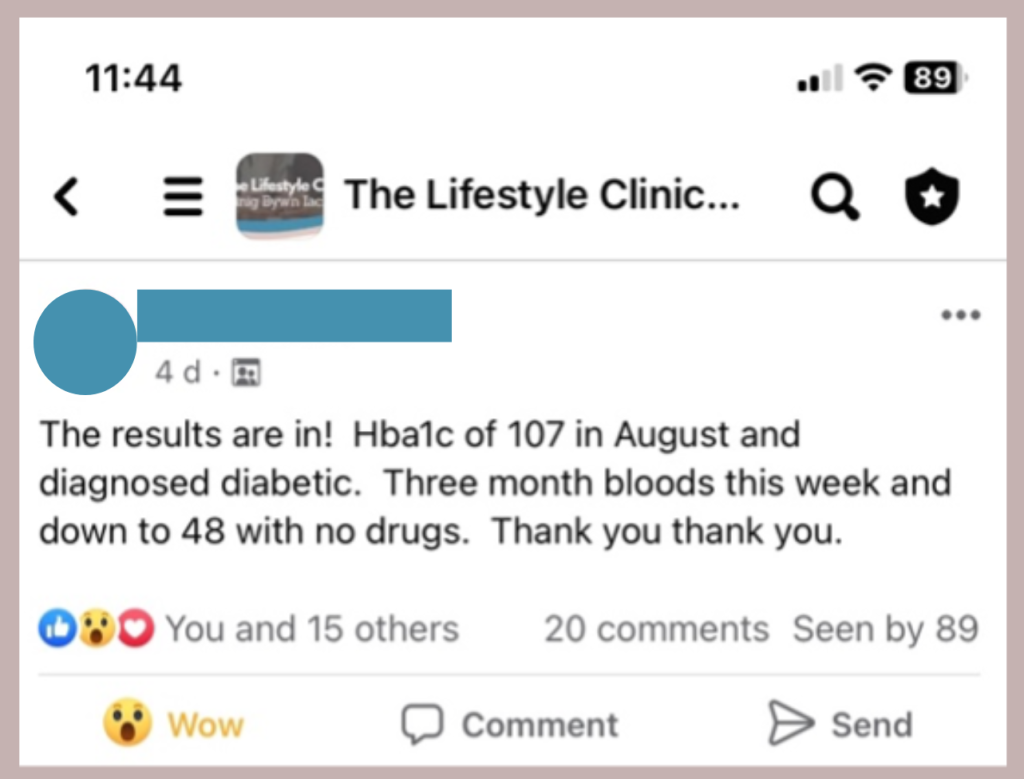
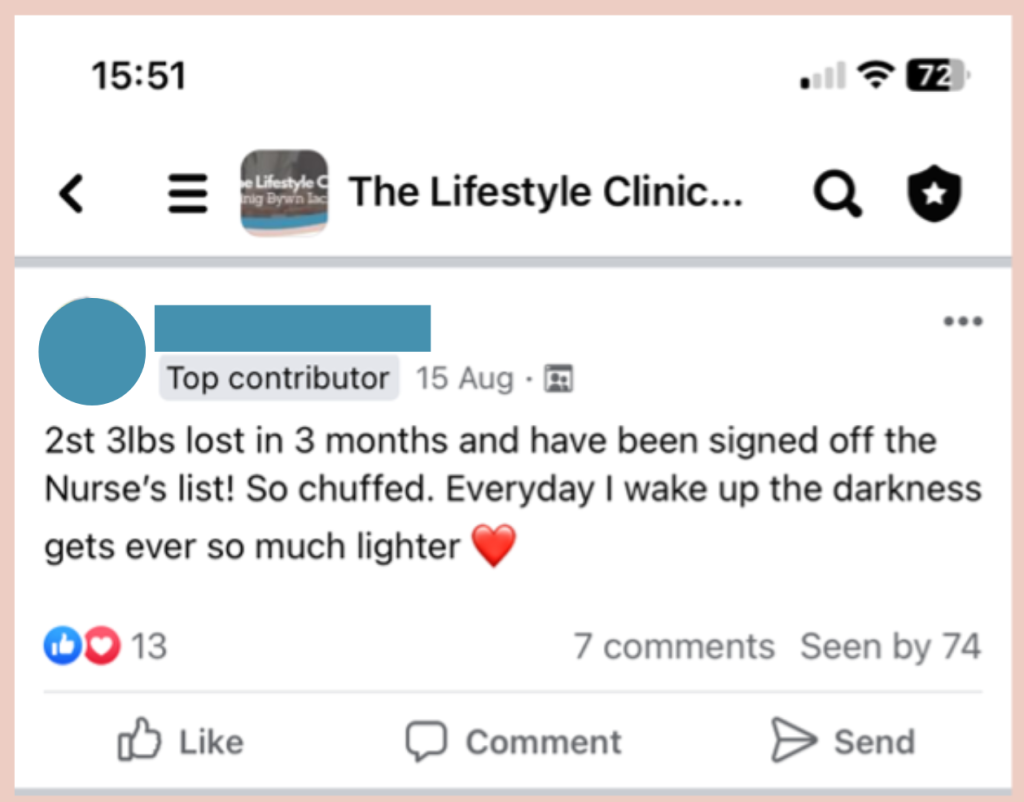
How members went from struggling with carbs to steady blood sugar and quieter cravings.
1 in 3 reversed their type 2 diabetes within three months
8.6KG average weight loss
81% lowered their blood sugars
71% lost more than 5% body weight
95% said their lifestyle had improved
41% had stopped or decreased medication dose
11cm average decrease in waist circumference
100% would recommend to a family member or friend
Outcomes from The Lifestyle Clinic's own patient audit, published in Diabetes & Primary Care (Frater N, 2023).
This is NOT a life sentence!
Underneath the fear of failing sits a quieter fear, and almost nobody says it out loud. It is the fear that this is permanent. That a diagnosis means never again. No cake at the birthday, no pudding at Christmas, restriction stretching out in front of you forever. That belief stops a lot of people before they even start. So let me tell you what the science actually says.
Give your pancreas a sustained rest from a heavy glucose load, let the weight and the HbA1c come down, and something quietly remarkable begins. The pancreas starts to recover. This is the finding from the DiRECT trial, led by Professor Roy Taylor. In people who reached remission, the function of the insulin-producing cells came back to a level close to people who never had diabetes, and it held steady over two years. In his words, those cells were never dead. They can recover.
A recovering pancreas can handle a slice of birthday cake in a way a struggling one never could.
I want to be straight with you about what that does and does not mean, because the honesty is the whole point.
Three things I will always tell you straight:
- Remission, not cure. Go back to the old way and the condition can return. The risk never fully disappears.
- It can happen, for many. Recovery is more likely the sooner you start after diagnosis. It is not seen in everyone, particularly with long-standing diabetes, or where insulin is already needed. I will never promise it.
- Remission is not the only win. Bringing your HbA1c down by 10 changes your risk, even if you never reach the remission number. Control counts, and it keeps counting for years.
Individual results vary. If you take medication for diabetes or blood pressure, please keep monitoring, because improving blood sugar can change what you need quickly, and your GP may need to review your doses.
What’s included?
Everything that comes with your place
- The full three-phase pathway. Short, clear videos you watch in your own time, building from breakfast to a complete way of eating.
- A downloadable guide for every step. Shopping lists, meal planners, the Big 5 substitution cheat sheet, the Two Meal Compromise guide, snack guides.
- Over 100 recipes and meal plans, everyday British ingredients, with vegetarian, vegan, gluten free and dairy free versions.
- The Autopilot Meal System, so the 6pm what is for dinner question disappears for good.
- Monthly live Accelerator workshops with me on Zoom, with a workbook, recorded if you cannot make it live.
- A GP-led community on Facebook and WhatsApp, so you are never doing this alone or guessing.
- A troubleshooting guide for the bad weeks, the holidays and the social events, so getting back on track never relies on willpower.
- The Sweet Tooth Challenge, plus bonus guides and weight-loss plateau training for when the scales dig their heels in.
How much are the programmes?
Pricing:
Blood Sugar Mastery Gold Programme
Full member price:
£497
For the person ready to follow the full pathway at their own pace, with the monthly workshops and the community behind them. (Click below for payment plans)
Blood Sugar Mastery VIP Access
Full member price:
£1997
One VIP place per cohort. For the person who wants Dr Nerys alongside them, blood tests and medication reviewed personally, moving faster. (Click below for payment plans)
Refund Policy: Join, and if it is not right for you, you have 14 days to ask for a full refund.
Take back control with Blood Sugar Mastery
1 in 3 people who go through the Blood Sugar Mastery programme reach remission of type 2 diabetes.
Your questions answered
FAQs
Can't I just Google this - or ask ChatGPT?
You can. And if you’ve landed on this page, you probably already have. The internet gives you a thousand different answers, half of which contradict each other, and none of which know your household, your cravings, or why your numbers aren’t moving. This programme isn’t information, it’s a structured, sequenced system built by a doctor who has spent nearly a decade with people in exactly your situation.
I'm not sure I'll be able to stick to it.
I'm on medication — is this safe?
I've already tried low carb and it didn't work.
I can't cook differently from my family.
What if I do everything and my numbers still don't move?
The biology works. When you consistently reduce the glucose load on your body, your blood sugar responds. It may not happen in week one, but it happens. I have seen it hundreds of times.
Is the price worth it?
What you get is a doctor-led, clinically grounded system built by someone who has spent nearly a decade getting results with people in exactly your situation. One in three people who go through the programme reach remission of type 2 diabetes. This is where that journey starts, at a price that reflects what a real first step should cost.
What if I've had type 2 diabetes for years, is it too late?
It is never too late. The body has a remarkable capacity to respond when you give it the right foundations, and in many cases the changes people see through diet and lifestyle are more significant than anything medication alone can achieve. I have worked with people at every stage, many living with this for years, who have reduced their HbA1c, come off medication and reached remission. Wherever you start from, there is meaningful progress to be made.
I cannot do exercise
You do not need a gym. We have moved away from eat less, move more. The focus is food, sleep, stress and habit. Movement is part of a healthy life, and there are no gym routines at all here.
Who is this not suitable for?
This programme is not suitable for anyone with a diagnosed or undiagnosed eating disorder, or anyone with type 1 diabetes. If you are unsure whether it is right for you, or you would like a programme with medical supervision, email info@thelifestyleclinic.co.uk.
Final words:
If you have read this far, something in here has spoken to you.
I have helped people from every walk of life, every schedule, every household, every starting point. The people who get results are not the most disciplined. They are the ones who were open, willing to start small, and trusted the process long enough to feel the difference.
There are 30 places in this cohort. When they are gone, the programme closes for around three months. If this is for you, now is the moment.
Start with breakfast. Let the rest follow.
With warmth,
Dr Nerys Frater
NHS GP. Founder, The Lifestyle Clinic.