
21 Jul Why a Diet Won’t Fix Your Blood Sugar (And What Actually Does)
Let me ask you something. If you’ve been told your blood sugar is high, or you’ve got prediabetes or type 2 diabetes, how many times have you tried to do something about it? Really tried.
Cut out sugar. Switched to wholemeal. Done the NHS course. Joined a slimming club. Bought the cookbook. Downloaded the app. Said no to the biscuits at work for three weeks running.
And then struggled. Couldn’t keep it up. Had a wobble, fought the cravings, got fed up. Only to try again. And find the same cycle repeating.
And who knows this feeling: going back for the blood test, hopeful, because yes, there were slip-ups, but overall you’ve made changes. You’ve been better. You’ve said no. You’ve done the things. And then the number has barely moved. Your weight has shifted a little. And for some people, the number has actually gone up.
I see this very often as a doctor. In clinic, I sit with people I spoke to three months earlier about cutting sugar, and I have to deliver the news that the changes haven’t done enough, and now they need tablets. I see how disappointed they are. How perplexed. How confused about what to do next.
Most people would rather not be on tablets. And most believe they have no choice. Or so they think.
It was never a willpower problem
I’m Dr Nerys Frater, an NHS GP in West Wales, and the founder of The Lifestyle Clinic. I founded it out of frustration. Frustration with ten-minute appointments that couldn’t hold the conversation that actually needed to happen. Frustration with watching people follow the advice and get nowhere. And eventually, frustration with myself, because I was the one giving that advice.
So I started asking why. Not why aren’t they trying hard enough. Just: why isn’t it working?
And the answer, when I finally found it, had almost nothing to do with willpower. It had everything to do with one small organ that nobody in that ten-minute appointment ever had time to explain.
What if this was a game?
Before we get to that organ, I need to offer you a completely different way of thinking. I’ve been helping people reverse diabetes for ten years, and here’s the idea I want you to sit with. What if this was a game?
Stay with me, because this is interesting. If I offered you a thousand pounds to beat me at chess, and you’d never played, what’s the first thing you’d do? You’d learn the rules. Obviously. You’d study the game. And if you lost, and I offered you two thousand for a rematch, you’d come back with a different strategy. Of course you would.
So why, when it comes to our health, do we keep going back with exactly the same strategy every single time? And when it doesn’t work, we blame ourselves. Our willpower. Our discipline. Our personality. Never the strategy.
Isn’t it telling that putting a money value on a challenge sharpens our focus and makes us think differently, yet health doesn’t quite light that same fire? So let me ask it the other way.
What is the value of your health, in money terms? How much is it worth to you to be without tablets? To be without the fatigue, the low self-esteem, the loss of control? What would you pay for more energy, for more years with your children and grandchildren? Put a figure on it.
Now. If you were entering that game, would you learn the rules? Would you want to understand that little organ sitting just beneath your stomach? Of course you would. So let’s go there.
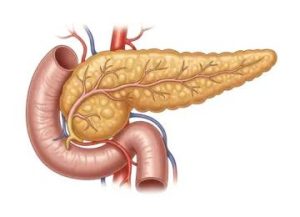
Meet the organ every diet forgot: your pancreas
Let me introduce the organ I advocate for every single day. The pancreas. I think of it as a quiet little friend. It never complains. It works hard, really hard, taking on more and more, and it never says a word.
Here’s something that shocks most people. At the point of a type 2 diabetes diagnosis, only around half of the cells that control your blood sugar are still working properly. Half. And yet you haven’t felt any different. Most people I see are stunned to be diagnosed, because the pancreas hadn’t complained.
Imagine only one lung working. Or half a brain. You’d know, wouldn’t you?
That’s what type 2 diabetes really is. An organ that’s burning out. Exhausted. One that needs help.
You’ve probably seen someone burning out at work. Drowning, overwhelmed. Maybe you’ve been that person. When you’ve got more work than you can manage, you stop being efficient. You start making mistakes. You lose control. Eventually you stop functioning, the work overspills, and you have to stop altogether.
That is the pancreas. And its workload is glucose. It has the tricky job of keeping your glucose just right, not so low that you feel dizzy and unwell, not so high that it inflames and damages your cells.
But the modern diet hands us so much glucose. And much of it is hidden. You don’t even know it’s there. This is not your fault. It’s not your fault that, for decades, sugar and sweeteners and processed food have quietly filled us all with glucose and put our pancreas under strain. You feel no different, because the pancreas doesn’t complain. Not until it’s completely overwhelmed.
By the time the numbers are high enough to show on a blood test, that organ has often been struggling silently for years. Sometimes decades.
Want to learn the rules properly?
If you want me to teach you how to take the workload off your pancreas in a way that fits your real life, come and join me. You can register for the next Reset Event here.
Why every diet gave you the wrong result
So here’s the thing. Every diet you’ve tried. Every slimming club. Every app. Every Monday-morning reset. None of them were designed with this organ in mind. None of them were asking: how do we help the pancreas rest? How do we reduce its workload?
They were asking a different question entirely. How do I lose weight? How do I cut fat? How do I reduce calories? But the pancreas cares nothing for calories and fat. It is struggling with glucose. That’s a completely different question, which is exactly why those plans kept handing you a completely different result from the one you needed.
It was never a willpower problem. It was a strategy problem.
And the moment you start seeing it that way, the moment you stop blaming yourself and start asking the right question, everything shifts. Your blood sugar starts to move. The evening cravings start to quiet. And for the first time, you’re not fighting your own body. You’re finally working with it.

What happens when you understand the game
There is a way to help this organ. A game of strategy that is different from anything you’ve done before. It starts with understanding just a handful of things that nobody in that ten-minute appointment ever had time to explain.
And when people really understand them, I see blood sugar drop. I see medication come off. I see energy return in ways that genuinely surprise people, sometimes within weeks. Not because they suddenly found willpower they never had. Because they finally understood the game they were playing.
I know this from sitting across from people who told me they’d tried everything and had nothing left. When I ask them to think differently, when they finally see what game they’ve been playing, they come back and tell me they can’t quite believe the difference. In their numbers. In their energy. In how they feel at nine o’clock on a Wednesday evening. That never gets old.
And if you’ve been living with this for years?
It changes nothing about what’s possible. Every diet that didn’t work was not a verdict on you. It was the wrong strategy for the actual problem. You were trying to win a game of chess using the rules of draughts, and no amount of effort fixes that. Different rules do.
So if you’ve been told this is just your life now, I’d gently push back. It doesn’t have to be.
Save this: the shift in a nutshell
- If your blood test won’t move despite real effort, the problem is the strategy, not your willpower
- Diets are built to cut calories and fat. Your pancreas is struggling with glucose, a different problem entirely
- At diagnosis, only about half your blood-sugar-controlling cells may still be working well
- The pancreas never complains, so the strain builds silently for years before a blood test shows it
- The goal isn’t to try harder. It’s to rest the pancreas and reduce its glucose workload
- Learn where the hidden glucose is in everyday food, and you can start working with your body instead of against it
Ready to learn the rules of the game?
In my free Reset Event, I show you how to take the pressure off your pancreas and lower your blood sugar with a strategy that works when nothing else has, in a way that fits your actual life, not a perfect one. You can register for the next Reset Event here.
And if you’re wondering where all that hidden glucose is coming from in the first place, that’s exactly what I unpack next in where the glucose is hiding in everyday food.
Watch the full video on YouTube to learn more:
Disclaimer
The content published on this website is for general information and education only and is not a substitute for personalised medical advice, diagnosis, or treatment. Always seek advice from your GP or another qualified healthcare professional about your individual situation. Never disregard or delay seeking medical advice because of something you have read here or on this website. Do not start, stop, or change prescribed medication without medical guidance (this is especially important if you have diabetes or take medication that affects blood sugar or blood pressure).