
19 May What Is the Healthy Range for Type 2 Diabetes? (UK HbA1c + Finger-Prick Numbers Explained)
Ever looked at your blood sugar numbers and thought: What does this actually mean? Or felt a little anxious about what’s “normal,” what’s “high,” and what you’re supposed to be aiming for?
You’re not alone.
In this guide I’ll explain what a “healthy range” means for type 2 diabetes in the UK – without jargon and without judgement – so you can use your numbers as a tool for progress, not a reason for stress.
If you’d like support (and a clear plan for what to do next), you can join my next live webinar, The Reset Event, by clicking here.
First: you don’t have to be “in range” all the time
Let’s bust a big myth straight away:
You do not have to be in range 100% of the time to be healthy – or to be doing well.
Blood sugar is meant to move up and down. Meals, exercise, stress, illness, excitement, and poor sleep can all shift your readings.
I often say: think of blood sugar like the weather. One rainy day doesn’t mean you’ve “failed” at summer. What matters is the overall pattern.
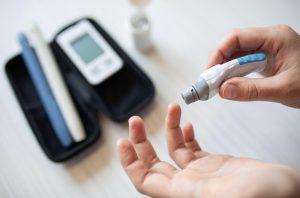
The two main types of blood sugar numbers (and why they can feel confusing)
Most people are juggling two different kinds of numbers:
- Random blood glucose (finger-prick or CGM): what your blood sugar is doing right now
- HbA1c: your average blood sugar over the last 2-3 months
They’re both useful – but they answer different questions.
Random blood glucose: a snapshot
A finger-prick reading (or CGM number) is like taking a photo. It will naturally:
- rise after meals
- drop after exercise
- change with stress, illness, poor sleep, or hormonal shifts
Because it’s a snapshot, it can be misleading on its own. Even someone without diabetes can see a high reading if they’ve just eaten a big bag of sweets. The key difference is how quickly their body brings it back down.
HbA1c: the bigger picture
HbA1c measures how much sugar has been “sticking” to your red blood cells, giving a picture of your average blood sugar over the past 2-3 months.
This is the test your medical team usually uses to diagnose diabetes and track progress over time.
HbA1c ranges in the UK: normal, prediabetes, and type 2 diabetes
Here are the UK thresholds (in mmol/mol, with the % in brackets):
- Normal (non-diabetic): below 42 mmol/mol (below 6.0%)
- Prediabetes: 42-47 mmol/mol (6.0-6.4%)
- Type 2 diabetes: 48 mmol/mol (6.5%) or above
A really important reminder:
These numbers are guides, not grades.
If your HbA1c isn’t where you want it to be right now, that doesn’t mean you’ve failed. It simply means your body needs a bit more support – and the goal is to gently bring your average down over time.
“My HbA1c is X, but my finger-prick is Y… is something wrong?”
This is one of the most confusing parts of diabetes management.
You might see an HbA1c result like 59 mmol/mol, then check your monitor and see 10.5 mmol/L, and wonder how those can both be true.
Here’s the key:
- HbA1c is your average speed over a whole road trip
- A finger-prick is how fast you’re going at one moment
You can have higher readings after meals and lower readings at other times. That doesn’t mean something is broken. It means your blood sugar is doing what blood sugar does: moving.
What numbers should you aim for on a finger-prick monitor?
Targets can vary depending on the person, medication, and your clinician’s advice – but for many people with type 2 diabetes, these are typical guide ranges:
- Before meals: around 4-7 mmol/L
- About 2 hours after meals: often up to 8.5-9 mmol/L (sometimes a bit higher if the meal was more carb-heavy)
What about “occasional high numbers”?
They happen.
You might see a higher reading after:
- a treat
- illness
- a stressful day
- a poor night’s sleep
- a meal that didn’t suit your body
That doesn’t mean you’ve failed. It’s just information.
If you’re checking regularly, try to zoom out and ask:
- What’s the pattern across the week?
- What foods spike me the most?
- What happens when I walk after meals?
- What happens when I’m stressed or sleeping badly?
That’s where the learning is.
What is “time in range” (and do you need to be perfect)?
If you use a CGM, you’ll often see time in range. It’s simply the percentage of time your glucose stays within your target range.
For many people with type 2 diabetes, a common target range is 4-10 mmol/L.
Here’s the bit that helps people breathe again:
Even people without diabetes are not in range 100% of the time.
One study using continuous glucose monitoring found that healthy adults spent about 96% of their time in the 3.9-7.8 mmol/L range – and some spent as little as 90% in range.
So if you’re seeing the occasional spike, you’re not “doing it wrong.” You’re human.
Time in range is helpful because it keeps you focused on the bigger picture – trends over time, not hour-by-hour fluctuations.

What progress actually looks like (and why it matters)
Progress is rarely perfect. It’s usually a gentle shift in the right direction.
Examples of meaningful wins:
- your HbA1c drops from 65 to 58
- you spend more time in range this month than last month
- your post-meal spikes are smaller or shorter
- you feel more confident reading your numbers
Every step counts.
If you’re feeling overwhelmed by numbers, start here
If checking your blood sugar is making you anxious, try this simple approach:
- Pick one time of day to check (for example, before breakfast, or 2 hours after your main meal)
- Do it for a short window (like 7-10 days)
- Look for patterns, not perfection
- Choose one small experiment (a protein-first breakfast, a 10-minute walk after meals, fewer ultra-processed carbs)
Your numbers are not a judgement. They’re feedback.
Want support and a clear next step?
If you’d like help making sense of your numbers – and turning them into a plan you can actually stick to – come and join my next live webinar, The Reset Event.
Learn and watch the full video on YouTube:
You don’t need to do this perfectly. You just need a kind, steady next step.
Disclaimer
The content published on this website is for general information and education only and is not a substitute for personalised medical advice, diagnosis, or treatment. Always seek advice from your GP or another qualified healthcare professional about your individual situation. Never disregard or delay seeking medical advice because of something you have read here or on this website. Do not start, stop, or change prescribed medication without medical guidance (this is especially important if you have diabetes or take medication that affects blood sugar or blood pressure).